Eyewitness account
Phase 1 · sound only
×2.0 if you lock in now
LatLongAgo
Ready
1:40.00
0
Where
When
Drag to scrub. Hold Shift for fine control. Click the year to type.
What happened next
Round score
-
Place
-
Year
-
Time
-
Ready
Set
Go!
Heads up
Quit this run?
Returning to the home screen ends the current run. Your unsaved round progress will be lost.
A 360° scene from history.
You wake up somewhere in history.
Look around. Where are you? What year is it?
More modes & eras
Your collection
Atlas
Session
Settings
Archive report
Run complete
Master Chronocartographer
Lost Tourist
0
Total0
Distance0 km
Years0
Hall of records
Leaderboard
Spectator replay
Run
Field log
Collection
Private leaderboards
Leagues
Bragging surface
My profile
Streak milestone
Day 7!
Step 1 of 5
Inspect the scene
New here?
How to play
The 60-second version
- Look around. Click and drag the panorama to inspect the scene. Wheel to zoom. Click the cyan + markers for short historical factoids.
- Place a pin. Click anywhere on the map to drop your guess for where this scene happened.
- Pick a year. Drag the timeline at the bottom. Hold Shift while dragging for fine control. Or click the year label to type one in directly.
- Submit. You score on both place and time. Five rounds per session.
No login is needed. Your progress lives in your browser. To enter the public leaderboard you'll be asked for an email at the end of a run — that's the only time it asks.
The five modes
- Classic
- Five random panoramas from the full archive of 336 historical scenes. Play as many runs as you want.
- Daily
- The same five rounds for every player worldwide, seeded by today's UTC date. One attempt per day. Builds your daily streak, which earns freezes (skip a day without breaking it) every seven days.
- Duel
- After finishing any session, click Challenge a friend to generate a 6-character code. Send the link. Whoever uses it plays the same five rounds you just played and tries to beat your score.
- Eyewitness
- No panorama. You read a three-line first-person account from someone who was there ("we rise before the river god is bright and haul ropes…") and deduce where and when. The panorama is revealed only after you submit.
- Newspaper
- No panorama. You read a redacted newspaper clip with names and places blacked out. Decode the era and place from context clues. Same reveal payoff at the end.
How scoring works
Each round is worth up to 5,000 points. You earn a place score and a time score, then they're combined.
- Place score decays smoothly with distance. Within ~8 km is perfect. Pinning the right country gives +800 bonus; right continent gives +300.
- Time score decays based on the era. Ancient rounds are forgiving (within ±380 years scores well); modern rounds are tight (within ±22 years).
- The two combine non-linearly: place counts a bit more than time. The result curve for each round is shown at reveal.
Tip: the timeline supports several ways to dial in a year. Drag normally for fast scrubbing, hold Shift for ~5× finer control, click the year label to type one in (e.g. 1492, 500 BCE), or use the + / − zoom buttons in the timeline header for broader sweeps. Arrow keys nudge ±5 years (Shift+arrows for ±1).
Sharing and friend duels
At the end of a run you'll see four share buttons:
- Copy result — Wordle-style emoji grid for chat. No spoilers.
- Save card — a polished PNG of your run with the world map and pins.
- Save replay — a 12-second WebM clip animating your run round by round.
- Challenge a friend — generates a duel link your friend can play.
- Spectator link — a read-only URL anyone can use to see your finished run.
When you paste a daily or duel URL into Discord, Slack, or Twitter, it auto-renders a custom unfurl image with today's stats or the duel code.
FAQ
Do I need an account?
No. The first time you load the game it gives you an anonymous token in your browser. You can play, build a streak, and unlock achievements without signing up. Your data is local. You only enter an email at the end of a run if you want your score on the public top-of-screen leaderboard.
What happens if I miss a daily?
If you have a streak freeze available, it auto-consumes one and your streak survives. Earn one freeze every seven consecutive days (max 3 saved). If your streak breaks, you get a 1.5× comeback bonus on your next three daily runs.
How do hotspots work?
The cyan + markers in panoramas are clickable. Each one reveals a one-sentence factoid about something in the scene — a flying buttress, a market stall, an architectural detail. They're free to use and don't cost score. Not every round has them yet.
Why is my place score so low even though I picked the right country?
The score is based on distance to the actual location. Right-country gives a bonus floor, but pinning London when the answer is Liverpool still has a ~280 km penalty on top.
The year I want isn't in the timeline.
Click the year label (next to "When") to type any year directly. Format: 1492, 1492 CE, 500 BCE, -500, 1492 AD.
Can I play yesterday's daily?
Not yet — daily challenges are once-per-day to keep them comparable. Classic mode randomly draws from the full archive if you want more rounds.
How does the leaderboard work?
The scrolling ticker at the top shows the highest scores submitted with an email address. Filter by era and region in the leaderboard modal (Settings → Leaderboard).
How is my email used?
Only to attribute your score on the leaderboard and (if you check the box) to send occasional emails about new daily challenges or features. We never sell or share it.
Why are the scenes generated rather than photographic?
Most of the scenes pre-date photography — the daguerreotype was invented in 1839, but most of our archive is older. The panoramas are AI-generated reconstructions based on historical research. They aim for plausibility, not perfect accuracy.
Personal stats
Field log
Where you guess
By era
Weekly recap
This week
Field log
Achievements
Pick a way to play
Game modes
-
Classic
Five random panoramas from the full archive of 336 historical scenes. Play as many runs as you want.
-
Daily
The same five rounds for every player worldwide, seeded by today's date. One attempt per day. Builds your daily streak.
-
Duel
Async friend match. Paste a duel code to play the same five rounds your friend just played and try to beat their score.
-
Eyewitness
No panorama until you submit. Read a three-line first-person account from someone who was there and deduce where and when.
-
Newspaper
Read a redacted newspaper clip with names and places blacked out. Decode the era and place from context.
-
Quick
One scene, 30 seconds, single submit. For when you only have a couple of minutes.
-
Detective
Clues drip in over 100s — sound, then a detail, then an eyewitness line, then the panorama. Lock in early for a multiplier.
-
Nature
Five relaxed rounds drawn only from the 64 natural-wonder panoramas. Not mixed into the historical archive.
-
Theatre
Lean back. Press play. Narrated audio tours through curated scenes — no scoring.
Step 1 · Pick a year
Lock in the year
During a round, the timeline at the bottom of the screen lets you guess when this scene happened.
When
1492 CE
Drag to scrub. Hold Shift for fine control. Click the year to type one in.
- Drag the timeline left or right to scrub through history.
- Shift + drag for ~5× finer control.
- Click the year label to type a year directly (e.g.
1492,500 BCE). - + / − zoom buttons widen or narrow the visible range.
Time scoring gets tighter the closer to modern: ancient scenes are forgiving (±380 years), modern scenes are strict (±22 years).
Step 2 · Drop a pin
Pick the location
The map panel lets you guess where the scene happened. Click anywhere to drop a pin — you can move it as many times as you like before submitting.
Where
Drop a pin
Drag to pan, scroll to zoom. In a real round, click anywhere to drop your pin.
- Click to drop a pin. Click again to move it.
- Pinch / wheel to zoom; drag to pan.
- Right country earns +800 bonus; right continent earns +300.
- The ↺ button in the panel header clears your pin.
Place score decays smoothly with distance. Within ~8 km is a perfect place score.

LatLongAgo
Round 3 of 5
1:23.45
9,640
This is what you see when a round starts
Where are you? When are you?
One of 336 hand-researched 360° scenes. Drag to look around. Click the cyan + markers for one-line history clues. Then drop a pin on the map and pick a year on the timeline.
When
1500 CE
2000 BCE
1000 BCE
0
1000 CE
1500 CE
2000 CE
Antiquity
Middle Ages
Early Modern
Modern
A guided look
A 360° scene from history. Guess where. Guess when.
You wake up somewhere in time. Look around. The wind, the market chatter, the harbor bell — every sound was built for this scene. Then place a pin and pick a year. Five rounds. That's a run.
What's in the archive
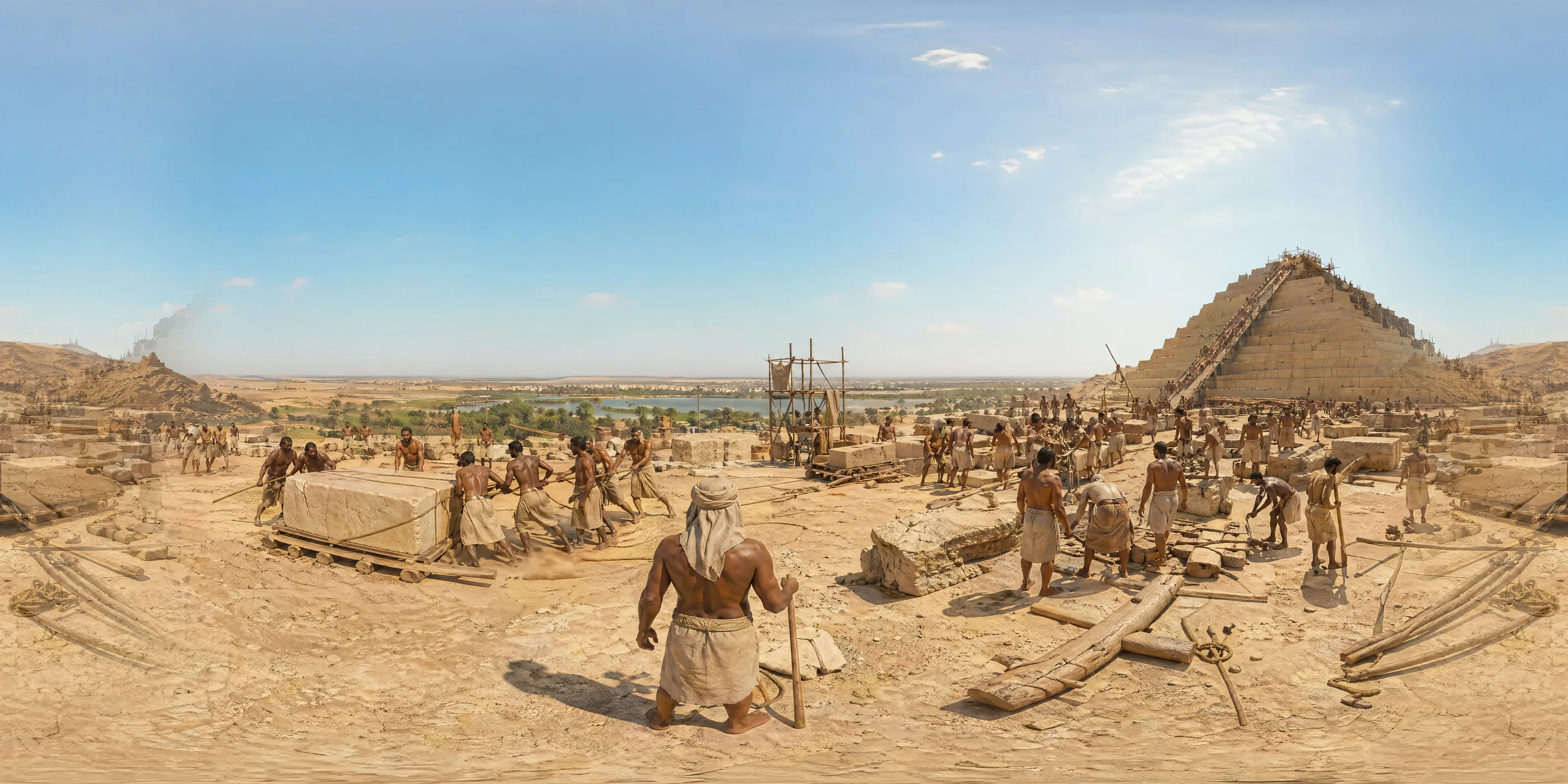
- 336 historical scenes, from the Great Pyramid construction to the Apollo 11 launch
- 64 natural wonders for the calm rounds
- 524 fact hotspots tucked inside the panoramas — click the cyan + for a one-sentence story
- 400 per-scene sound effects: wind, water, footsteps, crowds
- 200 narration tracks for Theatre Mode
- An original theme score running underneath all of it
Nine ways to play
- Classic — five random scenes from the full archive
- Daily — the same five for everyone, once per day, builds your streak
- Duel — six-character code, send it to a friend, beat their score
- Eyewitness — no panorama, three lines from someone who was there
- Newspaper — no panorama, a redacted clip with names blacked out
- Detective — clues drip every 25 seconds, lock in early for a 2× multiplier
- Quick — one scene, 30 seconds, one submit
- Theatre — narrated audio tour, no scoring
- Nature — five relaxed rounds, natural wonders only
Earn it
Build a daily streak. Unlock achievements. Climb the global leaderboard. Flip Iron Cartographer on to hide labels, the era stamp, and the hints — that's the medal run.
Most history quizzes test what you remember. This one teaches you to read a scene.
Sample · 5-round recap
Run complete
This is what the end-of-run screen looks like after you finish all five rounds. You'll see a per-round recap, your total score, your rank, and share buttons.
- R1Storming of the Bastille · 17894,810
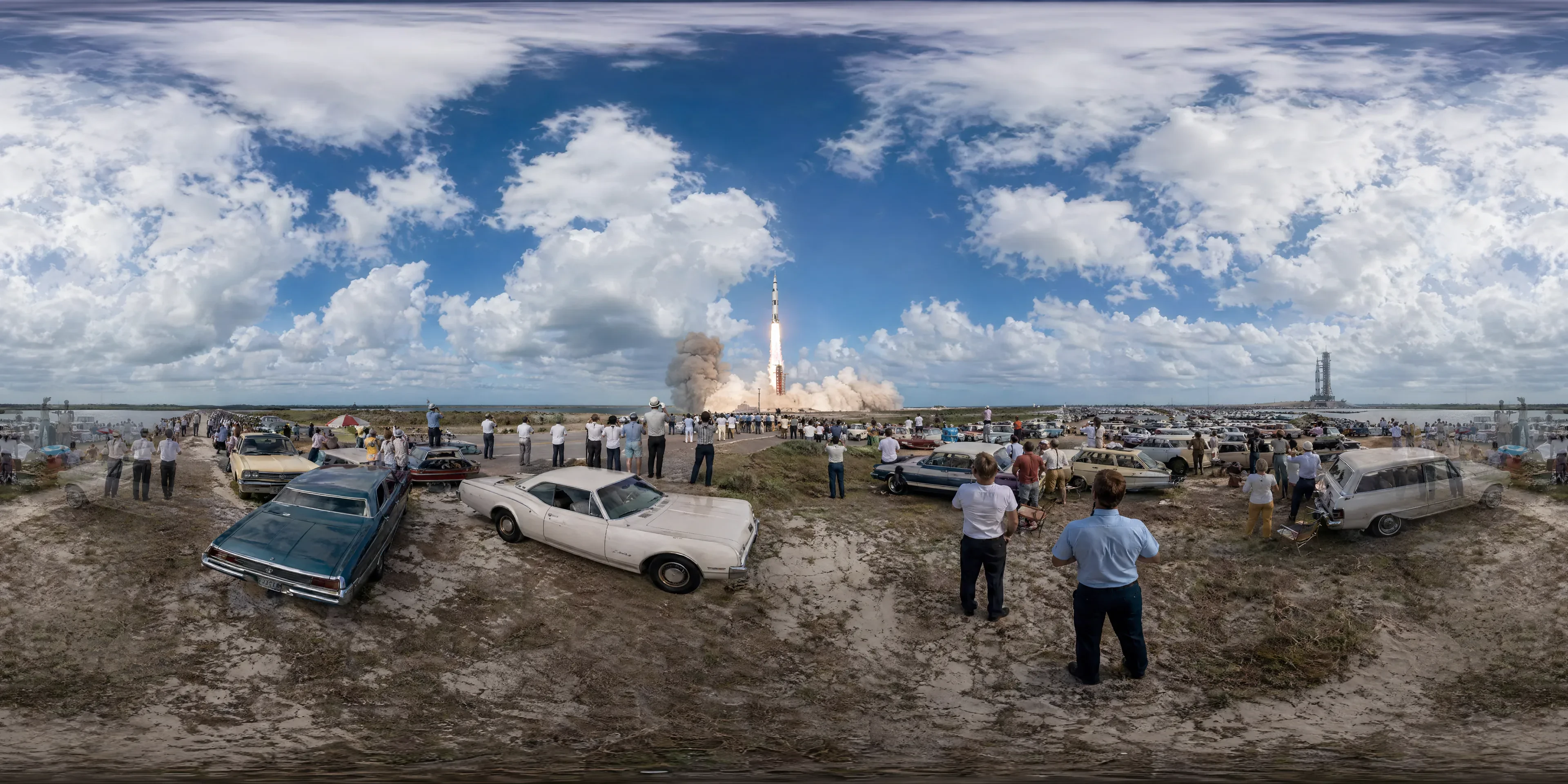
- R2Apollo 11 Launch · 19694,920
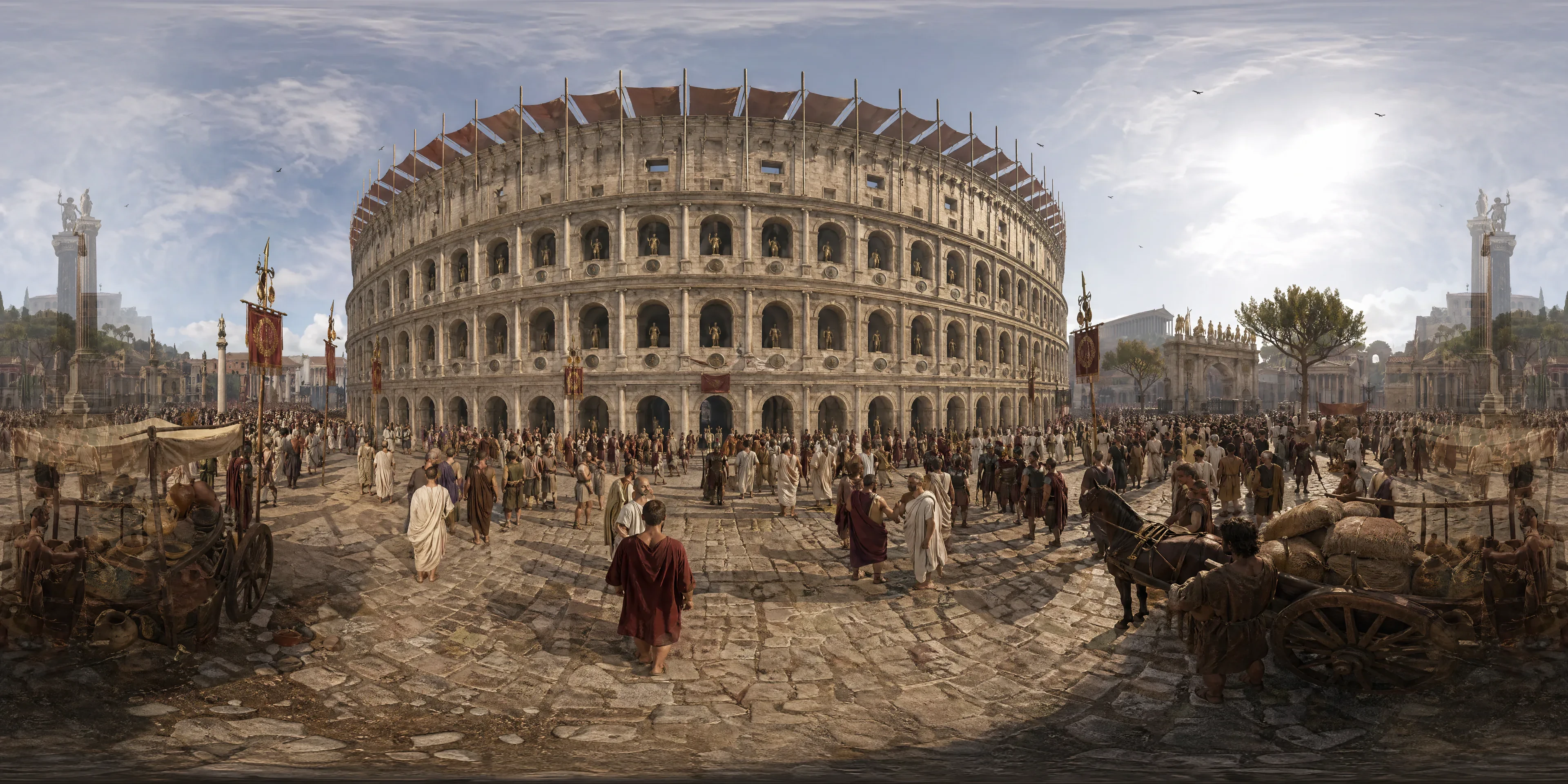
- R3Opening of the Colosseum · 803,640
- R4Great Pyramid Construction · −25603,180
- R5Fall of Constantinople · 14534,290
Total20,840
Avg distance92 km
Avg years off11
Rank: Veteran Cartographer
At the end of a real run you can save a share card, save a 12-second replay clip, challenge a friend with a duel code, or submit your score to the public leaderboard.
Acquisition opportunity
Acquire LatLongAgo: a historical 360° geography game platform.
LatLongAgo is a working browser game where players inspect immersive historical scenes, place a world-map pin, choose a year, and score against the real location and date. The acquisition package centers on the LatLongAgo.com domain, the Vite/TypeScript game client, Express/SQLite backend, researched content files, public media assets, and operating documentation.
Asking price
$12,500 USD
This is an asset sale, not a revenue-multiple sale. The current purchase flow uses a secure Escrow.com checkout for the domain and website package.
No inflated traffic or revenue claims. This is a transferable digital asset package for a buyer who can bring distribution, monetization, and ongoing execution.
Product walkthrough
See LatLongAgo in motion.
A short screen-recorded walkthrough of the live product: inspecting a 360° historical scene, placing a world-map pin, choosing a year, and scoring a round.
Who this is for
Best fit: an operator with a channel, audience, or product thesis.
LatLongAgo gives a buyer a polished starting point in a category with clear commercial intent. The next owner still needs to bring distribution, partnerships, monetization, and ongoing content or SEO execution.
Niche game operators
Start from a playable game loop with scoring, daily play, duels, leagues, achievements, and share mechanics instead of building a prototype first.
History and geography publishers
Convert an existing editorial audience into a daily interactive product that reinforces place, chronology, and historical context.
Edtech and classroom builders
Test teacher-friendly packaging around private leagues, daily assignments, source prompts, and low-friction browser access.
Newsletter and media operators
Use the daily challenge as recurring content, a retention hook, and a reason for readers to share results with friends or students.
SaaS or tool builders
Treat the game as a category wedge for classrooms, custom content packs, creator events, analytics, or lightweight learning tools.
What is included
A concrete asset package, not a placeholder concept.
The repo contains the playable site, source files, generated media, content data, server code, and documentation that support the current product surface. Final scope, account transferability, and third-party credentials should be confirmed during diligence.
336historical panorama rounds
64natural-wonder scenes
524embedded fact hotspots
400shipped scene sound files
200narration audio tracks
1brandable domain and game platform
| Asset component | Description | Buyer value | Transfer notes |
|---|---|---|---|
| Domain and brand | LatLongAgo.com and the LatLongAgo product identity: latitude, longitude, and time in one name. | Memorable positioning for a historical geography game or learning product. | Domain transfer timing depends on registrar rules and any lock periods. |
| Website codebase | Vite + TypeScript client using Three.js, Leaflet, Canvas, PWA support, and custom game UI. | A working browser product with the main interaction loop already implemented. | Buyer should review dependencies, deployment target, and build process during handoff. |
| Server and data layer | Express API, SQLite storage, server-authoritative answers, sessions, duels, leaderboard, profiles, stats, push, and OG image routes. | Gives the next owner an operational foundation rather than only static pages. | Environment variables, database state, keys, and hosting setup require buyer-owned accounts. |
| Content library | 336 historical rounds, 64 natural-wonder rounds, structured prompts, source data, hotspots, eyewitness, and newspaper content files. | Ready-made page and gameplay substance for a history/geography property. | Buyer should verify content rights, generated media terms, and any source attribution obligations. |
| Media assets | Public panorama images, natural-wonder images, sound-design files, narration tracks, theme music, and theatre tour audio/timing files. | Supports an immersive product experience without sourcing every asset from scratch. | Generated and third-party-adjacent assets should be reviewed as part of diligence. |
| Commercial page and docs | README, QA plan, content scripts, validation scripts, and this acquisition page with a Buyer Diligence Pack. | Speeds technical review, handoff, and post-acquisition planning. | Any post-sale support should be separately agreed before closing. |
Why this category matters
The wedge is historical location deduction, packaged as a daily browser habit.
The opportunity is not that this asset already owns the market. The opportunity is that it gives a buyer a polished starting point in a category with obvious adjacent audiences: history fans, geography players, teachers, museums, creators, newsletters, and casual puzzle players.
Clear user promise
Look around, decide where you are, decide when you are. The product can be explained quickly.
Content compounds
Every new scene, pack, teacher guide, or daily challenge can add surface area for search, social sharing, and repeat play.
Monetization remains open
The next owner can test media, education, sponsorship, licensing, premium packs, or creator-led events without changing the core premise.
Build vs. buy
Buying this asset starts the next owner past the blank-page phase.
No replacement-cost claim is needed to understand the tradeoff. A buyer can either source the domain, design the product, build the game, create content, QA the experience, and plan monetization from scratch, or begin with an existing foundation and focus on validation.
| Workstream | Build from scratch | Acquire LatLongAgo |
|---|---|---|
| Domain sourcing | Find, negotiate, and secure a brandable domain. | Start with LatLongAgo.com and existing brand language. |
| Product positioning | Define the category, name, promise, and user loop. | Use the existing "place plus time" positioning and daily puzzle structure. |
| UX and development | Design and implement 360 viewing, map guessing, timeline guessing, scoring, results, and modes. | Begin from the current Vite/TypeScript game, server API, PWA shell, and UI patterns. |
| Content structure | Research scenes, generate or source assets, create prompts, write clues, and wire data. | Use the existing round files, prompts, panoramas, audio, hotspots, and text modes. |
| QA and deployment | Create validation scripts, test flows, deploy frontend/API, and harden handoff docs. | Review the existing scripts, QA plan, README, server setup, and deployment path. |
| Commercialization planning | Decide which buyer segment and monetization model to test first. | Use the existing product surface to run faster experiments with real users. |
Buyer Diligence Pack
Download the Buyer Diligence Pack.
The PDF summarizes the asset, what is included, buyer fit, transfer process, commercialization paths, and diligence checklist in a clean offline format.
- Asset overview and included components
- Buyer archetypes and commercialization paths
- 30/60/90-day plan, transfer checklist, and risk notes
Potential paths for the next owner
Multiple commercialization paths are plausible, but none are automatic.
These are not current results or guarantees. They are practical directions a buyer could test after completing technical handoff, analytics setup, and content-rights review.
Daily puzzle media property
Publish a daily challenge, recap, and leaderboard through a newsletter, social account, or partner audience.
Classroom and edtech pilot
Package private leagues, assignments, and teacher guides for history, world geography, or homeschool use.
Sponsored historical packs
Create sponsored sets around museums, exhibits, travel themes, books, documentaries, or cultural institutions.
Premium archive or custom packs
Test paid access to deeper archives, custom classroom packs, creator-branded events, or advanced stats.
Lead capture for a larger offer
Use the game as an engaging top-of-funnel asset for history courses, tutoring, agency services, or learning tools.
SaaS/tool expansion
Extend the foundation into content-pack creation, team competitions, LMS-friendly exports, or analytics dashboards.
Transfer process
A straightforward asset handoff after buyer diligence.
The current page routes buyers through Escrow.com. Exact support terms, timelines, and included accounts should be agreed before closing.
- Review the acquisition page and diligence pack. Confirm the product scope, included files, asking price, and buyer-fit assumptions.
- Ask final questions. Use diligence to verify content rights, deployment requirements, analytics, accounts, and third-party dependencies.
- Complete purchase through Escrow.com or agreed safe transaction method. Use a transaction process that protects both buyer and seller.
- Transfer domain, codebase, assets, and documentation. Move the domain, repository, public media, content files, and available handoff docs.
- Buyer takes over operations. Set up hosting, analytics, Search Console, environment variables, monetization, monitoring, and growth execution.
Important buyer notes
Clear upside, clear responsibility.
This page is intentionally conservative: it describes the transferable asset base and plausible next steps without claiming current traction.
Sold as-is
The asset is sold as-is unless the buyer and seller agree otherwise in writing.
No performance guarantees
No revenue, traffic, rankings, customer demand, profitability, or monetization outcome is guaranteed.
Buyer diligence required
The buyer is responsible for verifying claims, dependencies, rights, account access, and technical condition.
Operations move to buyer
The buyer is responsible for future marketing, SEO, monetization, legal compliance, hosting, backups, and support.
Third-party accounts
Integrations, APIs, email, analytics, search tools, hosting, and push credentials may require buyer-owned accounts after transfer.
Registrar timing
Domain transfer timing depends on registrar rules, account status, and any applicable locks.
Offline review
Keep the diligence summary handy.
The Buyer Diligence Pack is designed for buyer review, partner discussion, and handoff planning.
Final CTA
Buy LatLongAgo.com and the website for $12,500 USD.
LatLongAgo is best for a buyer who wants a polished historical geography platform and is ready to take over hosting, analytics, growth, and monetization experiments.
Legal
Privacy Policy
Effective date: May 27, 2026
This Privacy Policy describes how LatLongAgo ("we", "us", or "the Service") handles information when you visit latlongago.com or use the LatLongAgo browser game. By using the Service you agree to the handling of information as described below. If you do not agree, please discontinue use of the Service.
1. Information we collect
Information you provide
- Display name. An optional nickname you choose for the leaderboard and your profile. You may use a pseudonym.
- Email address. Required only if you choose to submit a score to the public leaderboard at the end of a run. You may also opt in to receive occasional emails about new daily challenges and features.
- Optional username. A claimed handle for your public profile, if you choose to claim one.
- League membership data. If you create or join a private league, we store the league name, join code, members, and scores associated with that league.
Information collected automatically
- Anonymous player token. The first time you load the game, your browser is issued an anonymous identifier used to attribute scores, achievements, and progress to your device. No personal information is required to obtain this token.
- Gameplay data. Scores, guesses, distances, accuracy, mode, duel codes, session timestamps, hints used, and round outcomes are stored to support the leaderboard, achievements, duels, daily streaks, and personal stats.
- Local storage. The Service uses your browser's local storage to remember preferences (audio volume, mute, iron mode toggles), onboarding state, atlas progress, and other client-side settings.
- Server logs. Like most web services, our servers may record standard request metadata (IP address, user agent, timestamps) for security, abuse prevention, and basic operational diagnostics.
2. How we use information
- To operate the game: scoring, sessions, duels, leagues, leaderboards, achievements, and stats.
- To display your chosen display name and score on the public leaderboard if you submit one.
- To send the optional product emails you have explicitly consented to receive.
- To protect the Service against abuse, fraud, and technical errors.
- To analyze aggregate, non-identifying usage to improve the game and its content.
3. How we share information
We do not sell or rent personal information. We may share information only in these limited cases:
- Service providers. Trusted vendors that host our servers, deliver email, or provide error monitoring, acting on our instructions and bound by confidentiality.
- Legal requirements. When required to comply with applicable law, lawful requests, or to protect rights, safety, or property.
- Business transfers. In the event of a sale, merger, acquisition, or transfer of all or part of the Service (including a domain or asset sale), your information may be transferred to the acquiring party, subject to the protections described in this policy.
4. Cookies and similar technologies
The Service uses your browser's local storage to remember preferences and gameplay state. It does not currently use third-party advertising cookies or cross-site tracking pixels. You may clear local storage at any time via your browser settings.
5. Children's privacy
The Service is intended for a general audience. We do not knowingly collect personal information from children under 13. If you believe a child has provided us with personal information, please contact us and we will take reasonable steps to delete it.
6. Data retention
We retain gameplay data, scores, and account-related information for as long as needed to operate the Service and to support features such as leaderboards, leagues, and personal stats. You may request deletion of your email address or leaderboard entry by contacting us.
7. Your choices and rights
- Opting out of emails. If you receive product emails from us, every message includes an unsubscribe link.
- Deleting local data. Clear your browser's local storage for latlongago.com to remove client-side progress, settings, and the anonymous player token.
- Access or deletion requests. You may contact us to request access to, correction of, or deletion of personal information associated with your email address or leaderboard entry. Depending on your jurisdiction, you may have additional rights under applicable privacy laws.
8. Security
We use reasonable technical and organizational measures to protect information against unauthorized access, alteration, disclosure, or destruction. No method of transmission or storage is perfectly secure, and we cannot guarantee absolute security.
9. International users
The Service may be operated from, and information may be processed in, jurisdictions other than your own. By using the Service, you consent to such processing in accordance with this policy.
10. Changes to this policy
We may update this Privacy Policy from time to time. When we do, we will update the "Effective date" above. Continued use of the Service after an update means you accept the revised policy.
11. Contact
Questions about this Privacy Policy or about information we hold about you can be sent to support@latlongago.com.
Legal
Terms of Service
Effective date: May 27, 2026
These Terms of Service ("Terms") govern your access to and use of the LatLongAgo website and browser game at latlongago.com (the "Service"). By accessing or using the Service, you agree to be bound by these Terms. If you do not agree, do not use the Service.
1. Eligibility
You may use the Service only if you can form a binding contract under applicable law. If you are using the Service on behalf of a school, organization, or other entity, you represent that you have authority to bind that entity to these Terms.
2. Your account and gameplay data
- You may play anonymously. The Service issues an anonymous identifier to your browser; you do not need to register to play.
- You are responsible for any activity that occurs under your anonymous token, claimed username, league memberships, or email submissions.
- If you submit an email address with a score, you confirm that the email is yours and that the displayed name does not impersonate another person or violate these Terms.
3. Acceptable use
You agree not to:
- Cheat, automate gameplay, manipulate scores, or exploit bugs to gain an unfair leaderboard advantage.
- Submit display names, usernames, league names, or other content that is unlawful, harassing, hateful, sexually explicit, defamatory, or that impersonates another person or organization.
- Probe, scan, or attempt to breach the security or integrity of the Service, its servers, or other users' data.
- Reverse engineer, decompile, scrape at scale, or attempt to extract source data, panoramas, audio, or other assets in bulk except as expressly permitted.
- Use the Service to send unsolicited communications, malware, or spam.
- Use the Service in violation of any applicable law or regulation.
We may remove content, suspend accounts, invalidate scores, or block access at our discretion to enforce these Terms.
4. Content and intellectual property
The Service, including its software, gameplay design, written content, panoramas, audio, and other materials, is owned by LatLongAgo and its licensors and is protected by copyright, trademark, and other laws. Subject to your compliance with these Terms, you are granted a limited, non-exclusive, non-transferable, revocable license to access and play the Service for personal, non-commercial use.
Many panoramas in the Service are AI-generated reconstructions intended to convey the feel of historical scenes rather than to provide photographic or scholarly accuracy. They should not be relied upon as a historical record.
5. User-submitted content
By submitting content to the Service (for example, a display name, username, league name, duel participation, or feedback), you grant LatLongAgo a worldwide, royalty-free, non-exclusive license to host, store, reproduce, display, and use that content as needed to operate, improve, and promote the Service. You retain ownership of your submissions.
6. Third-party services and links
The Service may link to third-party websites or services, such as encyclopedia source links, transactional escrow services on the acquisition page, or email delivery providers. We are not responsible for the content, policies, or practices of any third-party site or service. Your use of third-party services is governed by their own terms and policies.
7. Acquisition page
The Service includes an "Acquire this site" page that describes a potential asset sale of the LatLongAgo brand, domain, and website. Statements on that page are informational, not promises of performance, and do not create any offer, contract, or fiduciary relationship except as expressly agreed in writing between LatLongAgo and a buyer.
8. Disclaimers
The Service is provided "as is" and "as available" without warranties of any kind, whether express or implied, including without limitation warranties of merchantability, fitness for a particular purpose, non-infringement, historical accuracy, uninterrupted availability, or that the Service will be free of defects, viruses, or errors. Use of the Service is at your own risk.
9. Limitation of liability
To the maximum extent permitted by law, in no event will LatLongAgo, its operators, contributors, or licensors be liable for any indirect, incidental, special, consequential, exemplary, or punitive damages, or for any loss of profits, revenue, data, goodwill, or other intangible losses arising out of or in connection with your use of the Service. Our aggregate liability for any claim arising out of or relating to the Service will not exceed one hundred U.S. dollars (US $100).
10. Indemnification
You agree to defend, indemnify, and hold harmless LatLongAgo and its operators from and against any claims, liabilities, damages, losses, and expenses (including reasonable attorneys' fees) arising out of or in any way connected with your use of the Service, your content, or your violation of these Terms.
11. Termination
We may suspend or terminate your access to the Service at any time, with or without notice, for any reason, including violation of these Terms. You may stop using the Service at any time. Provisions of these Terms that by their nature should survive termination will survive, including ownership provisions, disclaimers, indemnities, and limitations of liability.
12. Changes to the Service or Terms
We may modify the Service or these Terms at any time. When we update the Terms, we will revise the "Effective date" above. Material changes will be communicated through the Service when reasonable. Your continued use of the Service after changes take effect constitutes acceptance of the revised Terms.
13. Governing law and disputes
These Terms are governed by the laws of the jurisdiction in which the Service operator is established, without regard to its conflict-of-laws principles. To the extent permitted by law, any dispute arising out of or relating to these Terms or the Service will be resolved in the competent courts of that jurisdiction.
14. Contact
Questions about these Terms can be sent to support@latlongago.com.